Knives
Forged, ground and handled by hand since 2024, in 1084 and 1095 carbon steel and now AEB-L stainless.
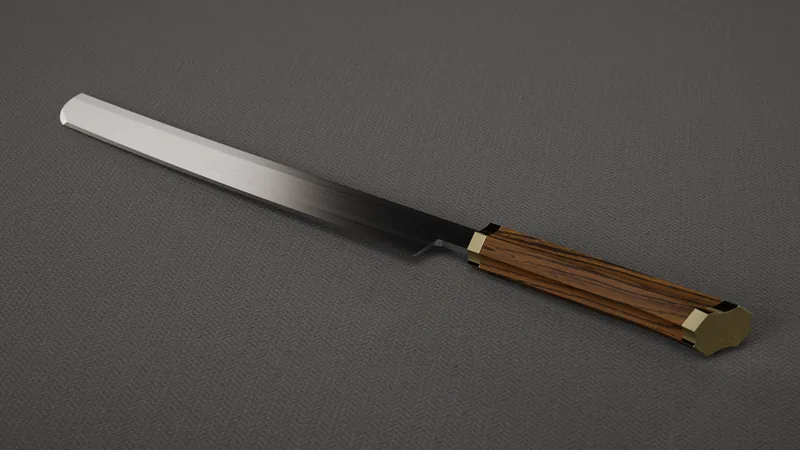
Seven knives, from 1084 carbon steel to AEB-L stainless, and the tooling to make them.
- Role
- Design and make
- Tools
- Forge, belt grinder, lathe, SOLIDWORKS
- Steels
- 1084, 1095, AEB-L
Learning steel by working it
I started in 2024 to learn what steel actually does: how it moves at the forge, how it grinds, and how it finishes by hand.
A knife puts geometry, heat and handle fit into one small object, and every mistake stays visible in the finished piece.
From eyeballed to modeled
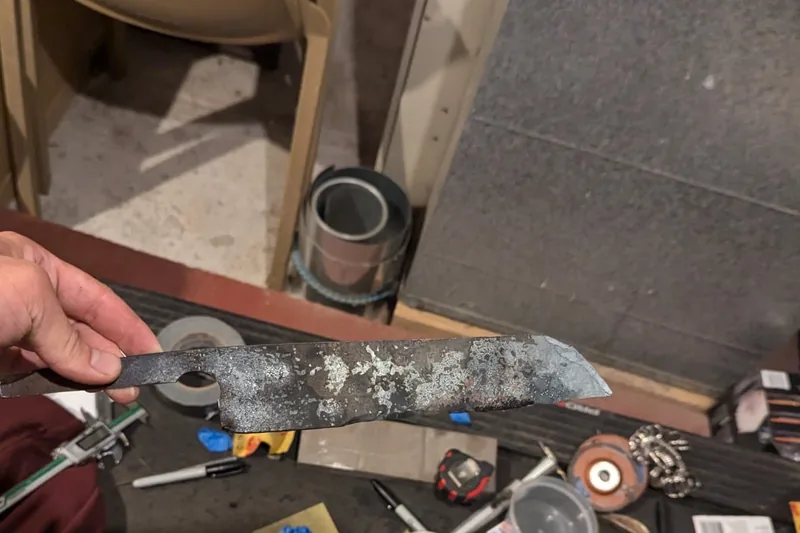
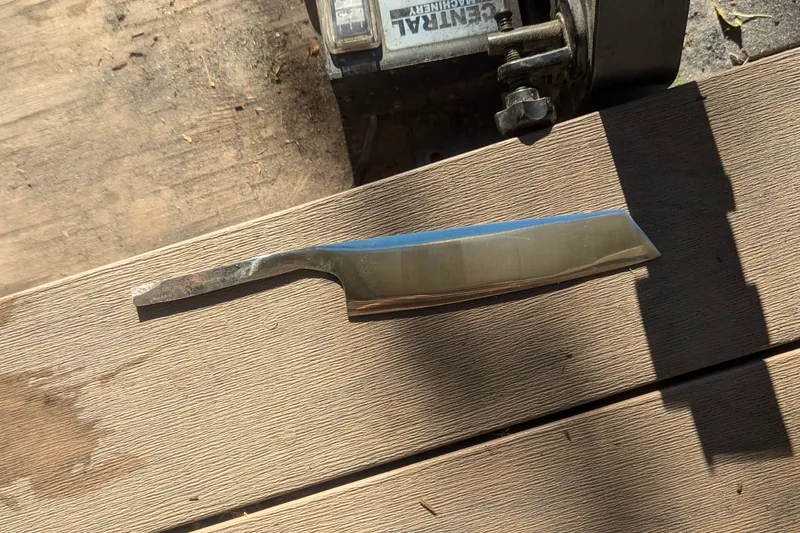
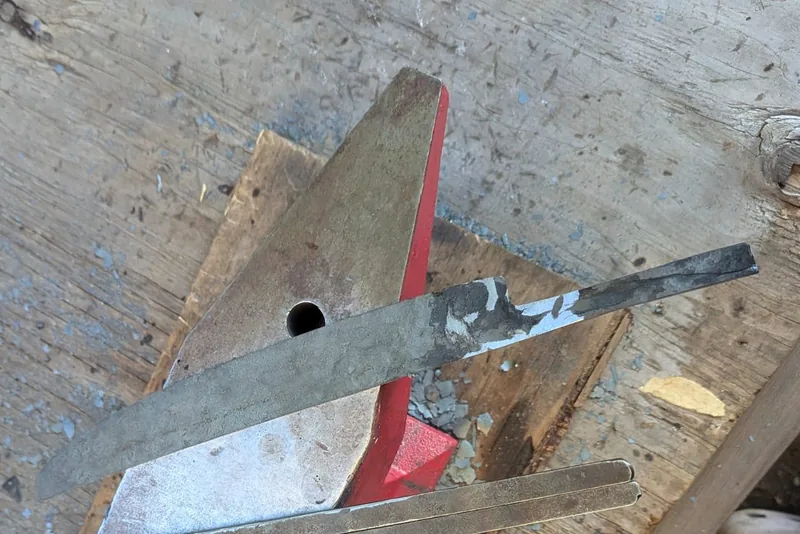
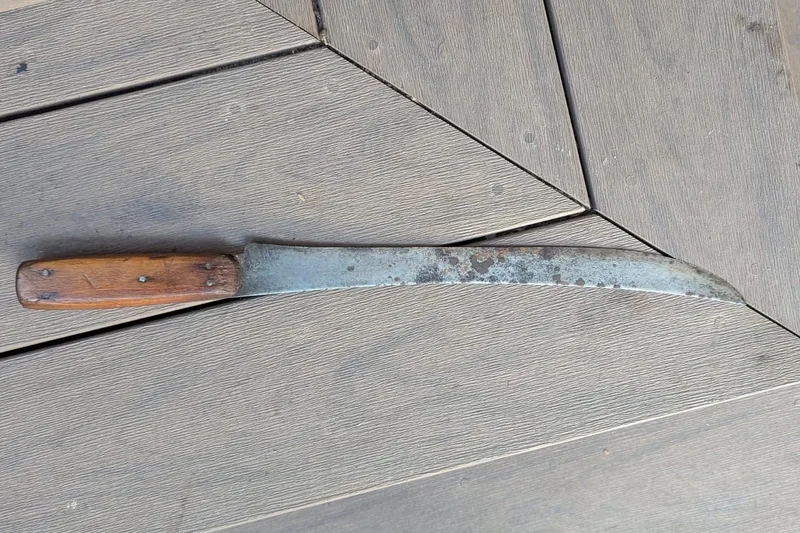
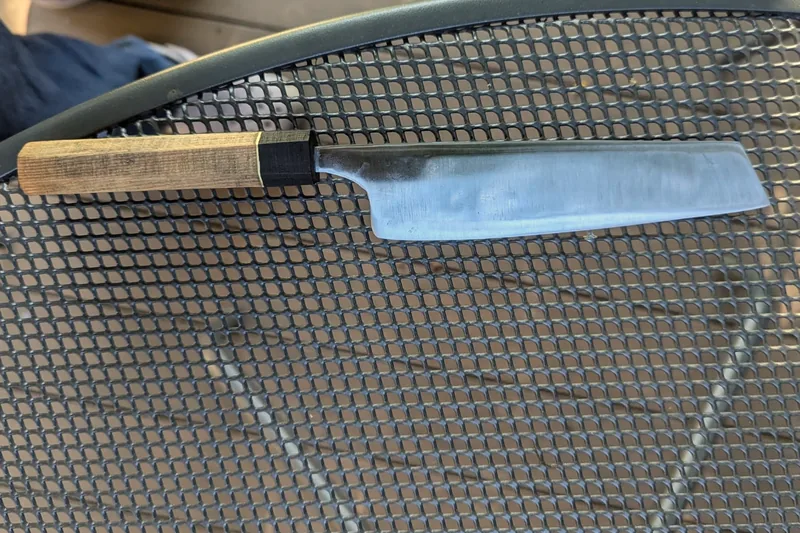
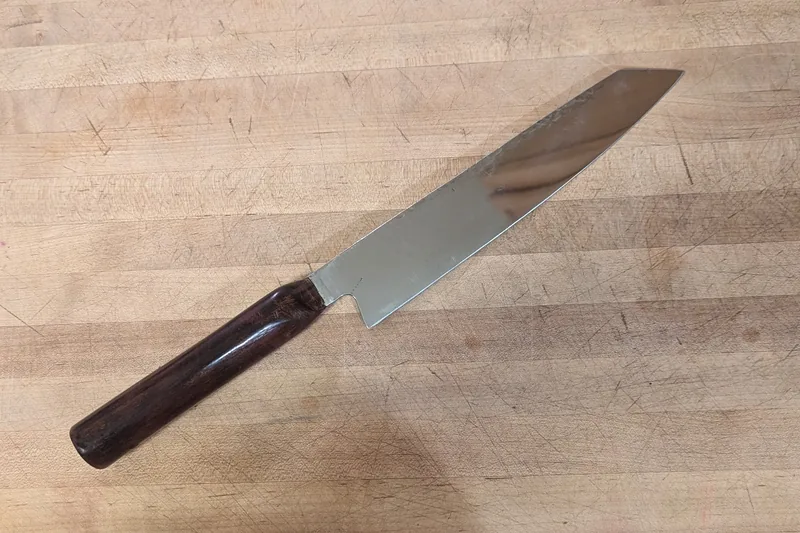
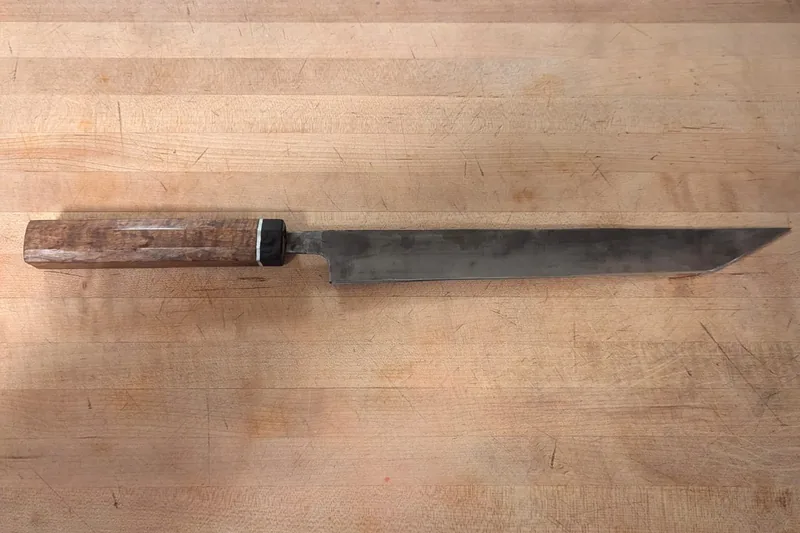
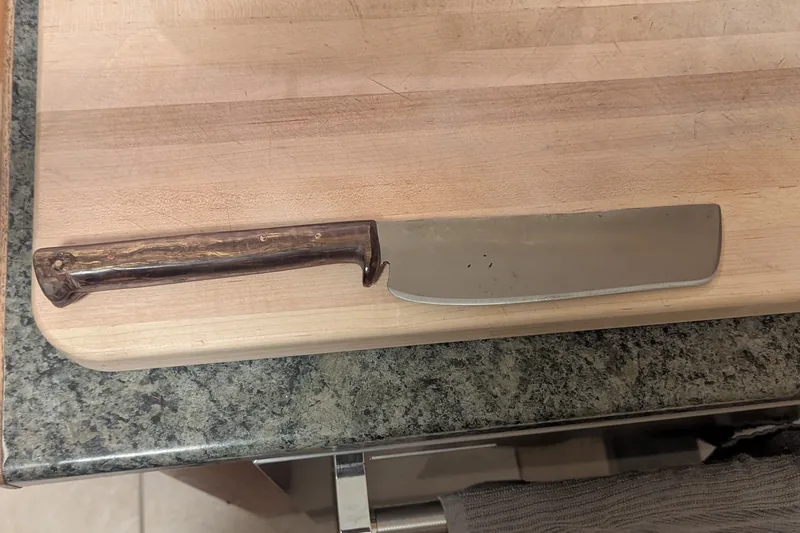
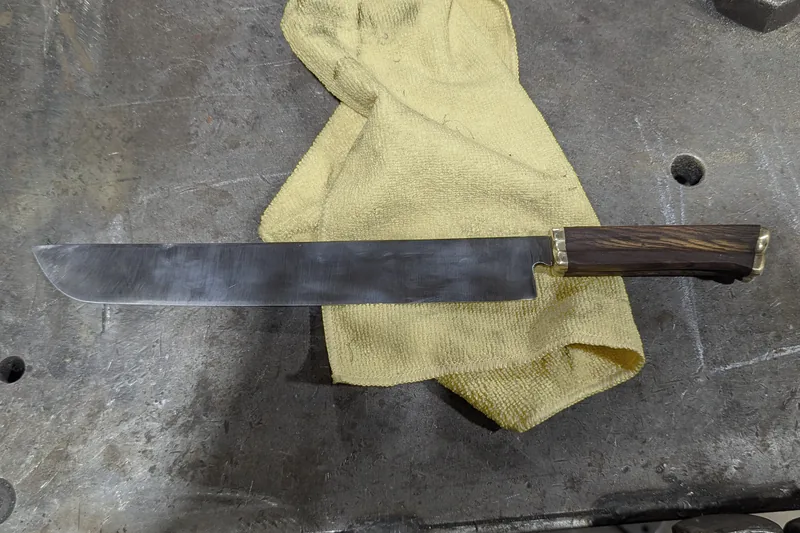
I started by forging traditional shapes in 1084 and 1095: a bunka, a kiritsuke, a long watermelon knife and a nata. My recent knives start on paper and in SOLIDWORKS instead.
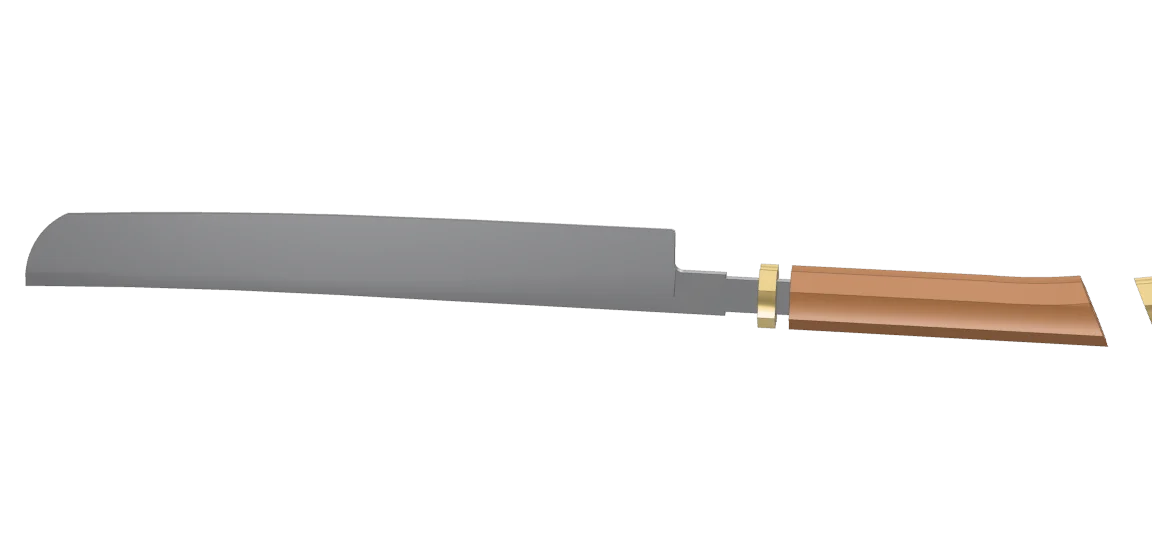
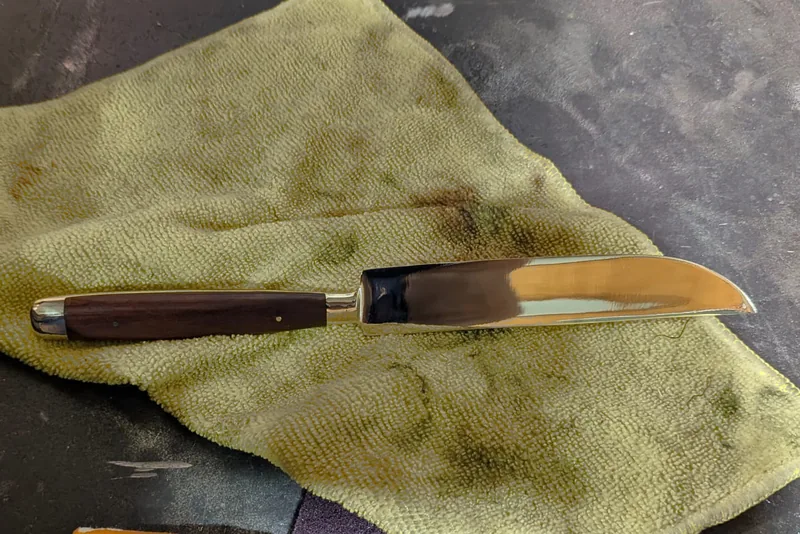
The butcher carving knife was modeled as an assembly of blade, bolster, handle and butt cap before any steel was cut.
Forge, grinder, lathe
Blades go from the forge to the grinder, and handles are shaped by hand or turned on the lathe, with brass fittings on the more recent knives.
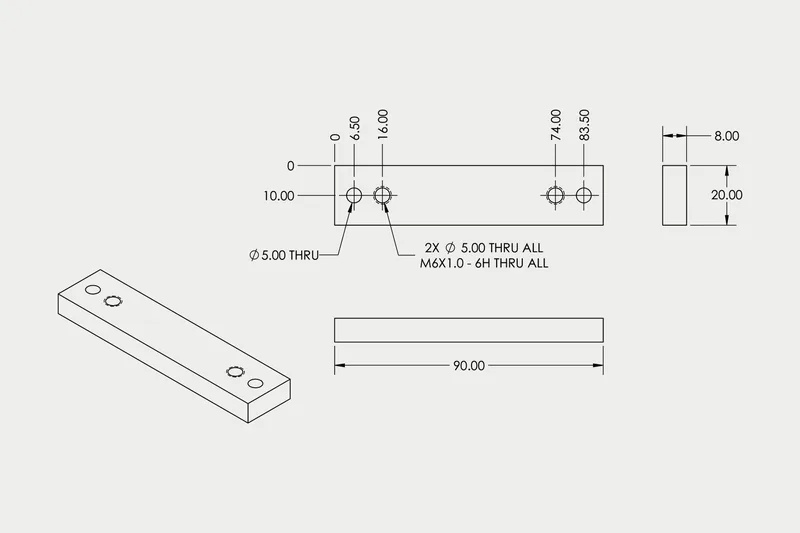
I make tooling too. The file guide is a matched pair of 90 × 20 × 8 mm bars, located by two 5 mm dowels and clamped with M6 screws, for cutting clean, square shoulders. A grinding jig for bevels is next.
Better steel, better process
The work has moved from carbon steel to AEB-L stainless, and from eyeballing a profile to modeling it first.
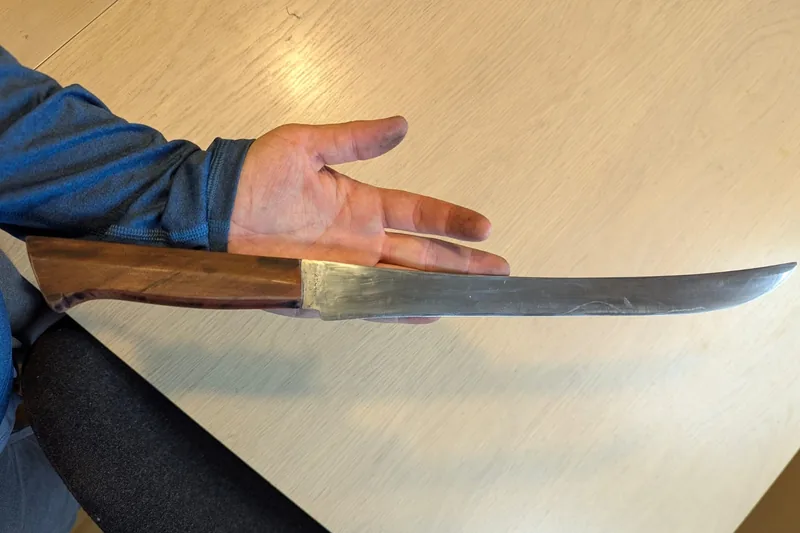
It also goes beyond new knives. The restored butcher knife started as a rusted, worn-out blade and came back with a clean grind and a new handle.
From the forge